How I Created My First Scientific Poster (And What I Learned)
Introduction
Creating a scientific poster is an essential skill for students and researchers. It allows you to present your work in a clear, visual, and concise way during conferences, presentations, or academic evaluations. A well-designed poster can effectively communicate your ideas and attract attention.
1. Understand the Purpose of a Scientific Poster
A scientific poster is not a full paper. Its goal is to:
Summarize your research
Highlight key results
Make information easy to understand visually
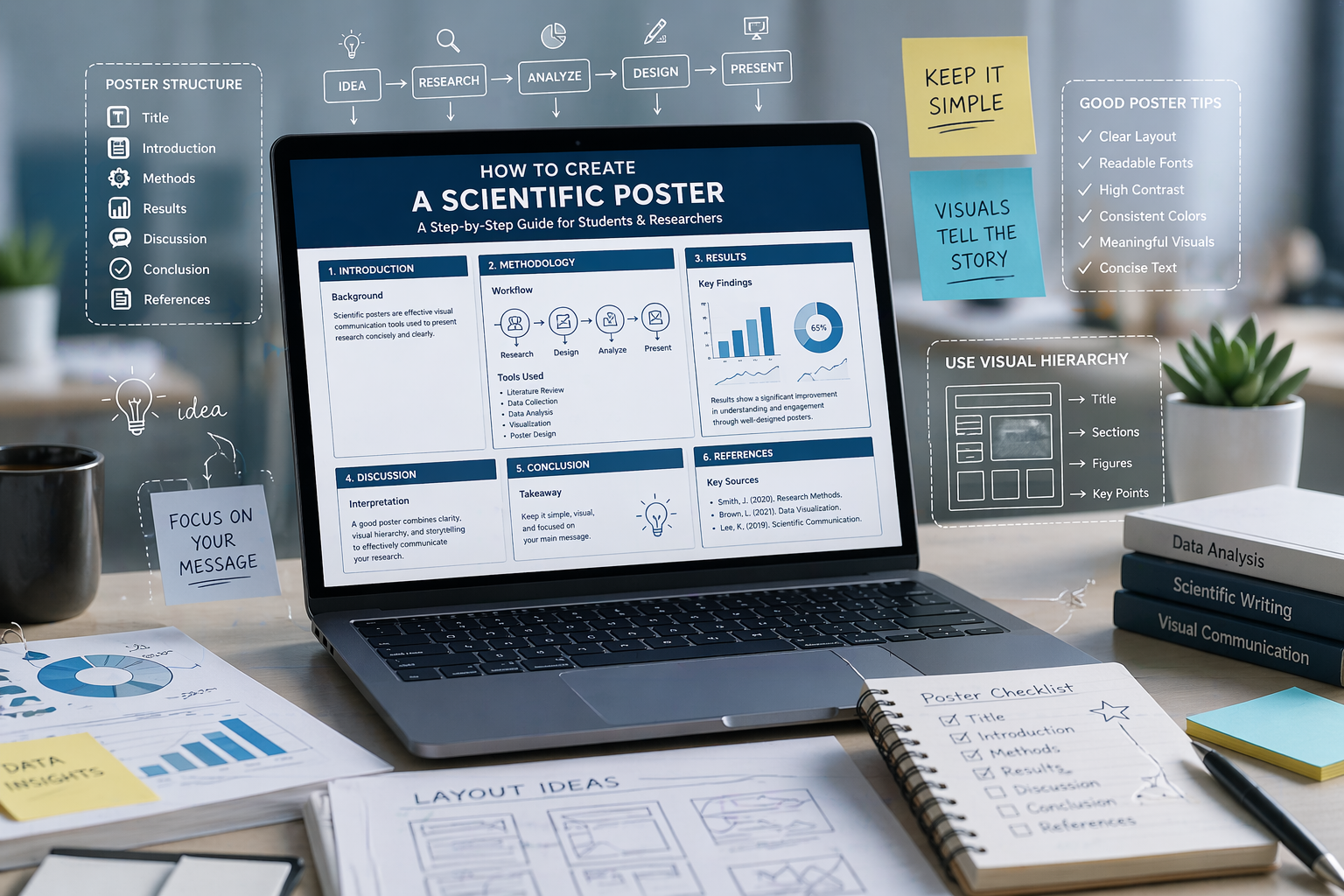
2. Structure of a Scientific Poster
A good poster usually includes the following sections:
Title
Clear and concise
Includes your name and affiliation
Abstract
Short summary of your work (150–200 words)
Introduction
Present the problem and objective
Context / Background
Explain the environment of your study
Methodology
Describe how your system or research works
Challenges & Support
Mention difficulties and tools used
Conclusion
Summarize results and impact
References
List your sources
3. Design Tips (Very Important)
A good design makes your poster more effective:
Use large fonts (easy to read from distance)
Keep text short and clear
Use colors consistently
Add icons and diagrams
Use arrows and flowcharts to explain processes
4. Use Diagrams and Visuals
Instead of long explanations, use:
Flowcharts
Graphs
Icons
System architecture diagrams
5. Common Mistakes to Avoid
❌ Too much text
❌ Small font size
❌ No visual structure
❌ Poor alignment
❌ Unclear message
6. Tools You Can Use
You can create your poster using:
PowerPoint
Canva
Figma
Adobe Illustrator
Conclusion
Creating a scientific poster requires both clear thinking and good design. By structuring your content properly and focusing on visual communication, you can effectively present your research and engage your audience.